The papers at The Keep, University of Sussex were unsorted and impossible to use in any meaningful sense. They have now been sorted, catalogued, and are available for researchers.
You can view the catalogue here – https://www.thekeep.info/collections/getrecord/GB181_SxMs172
Sinclair left behind her a huge amount of manuscript material relating to her creative and non-fiction writings, and her archives at the Kislak Center, University of Pennsylvania, have been catalogued and accessible for sixty years. Until recently it was assumed these were her only surviving manuscripts, but in 2013, a distant family member donated a trunk full of papers to the University of Sussex.
The papers in the trunk looked as though they had been scattered about and then hastily pulled back together, with a few pages from one manuscript and then a few from another, all out of order. Archival practice is usually to present an archive in its original form, but we quickly realised that this was not helpful in this case.
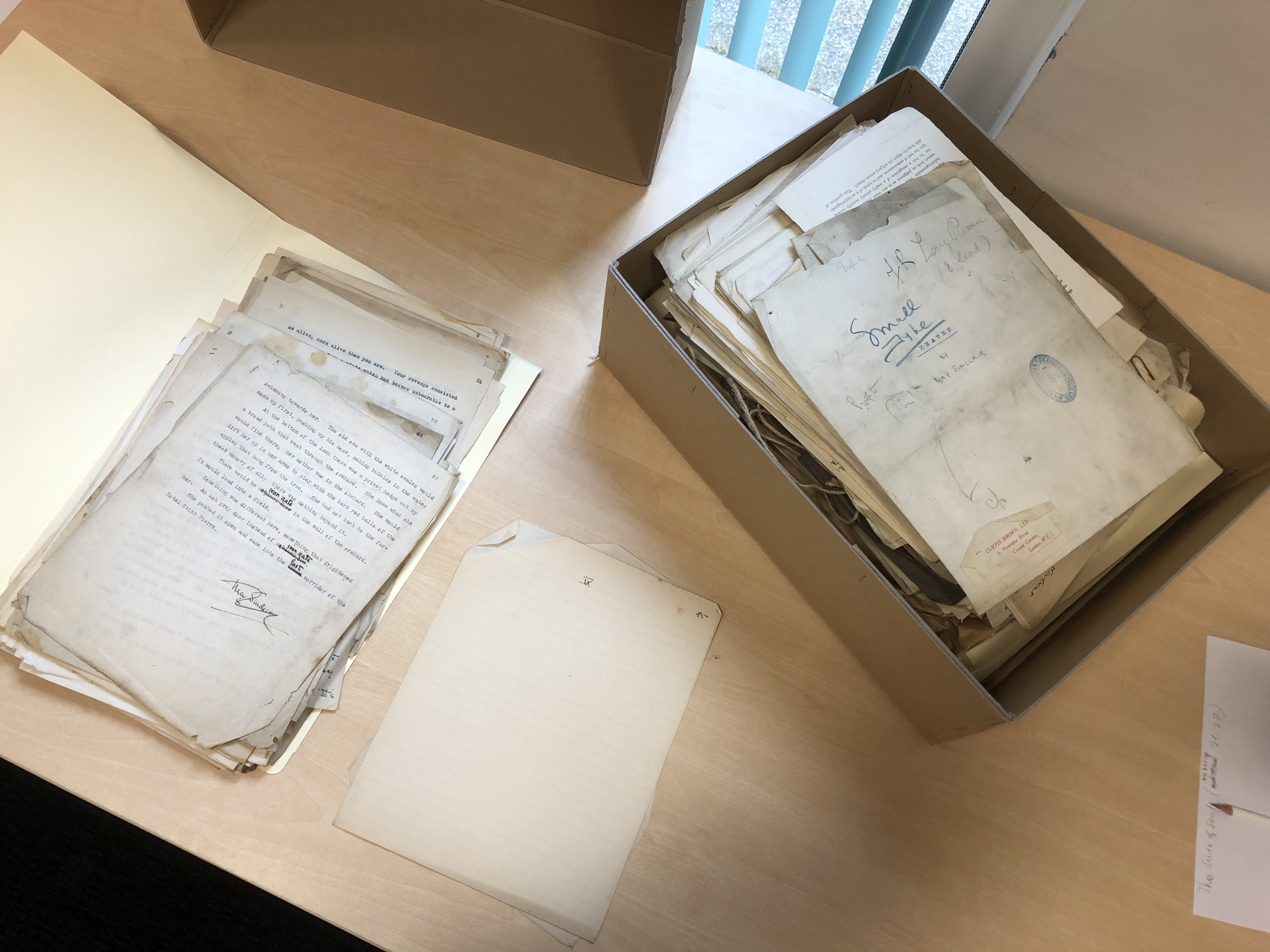
In May and June, 2024, the Sinclair project team – Rebecca Bowler, Claire Drewery, Olha Honcharova and Karen Watson – spent three weeks in the archives, sorting and then cataloguing the papers. This involved spreading out over multiple tables, reuniting odd pages of manuscripts, and establishing what was there. We discovered that there are some complete manuscripts – Anne Severn and the Fieldings (1922), Life and Death of Harriett Frean (1922), Arnold Waterlow: A Life (1924), A Cure of Souls (1924) and The Rector of Wyck (1925) – and some partial manuscripts. There are many drafts of the short stories, some plays and poetry, and a wealth of biographical and financial material. Of the partial manuscripts it is sometimes clear that whereas The Kislak Center at the University of Pennsylvania holds part of one document, The Keep, University of Sussex, holds the rest of it. The manuscripts at Penn and at Sussex were one collection and at some point in the past became separated.
We’ve included in the catalogue some indicative descriptions of some of the more interesting holdings, including the state of the manuscripts, original material, how it corresponds with the archive at the University of Pennsylvania, and the extent of Sinclair’s revisions. We hope that this will help researchers who want to examine the papers to plan their visit!
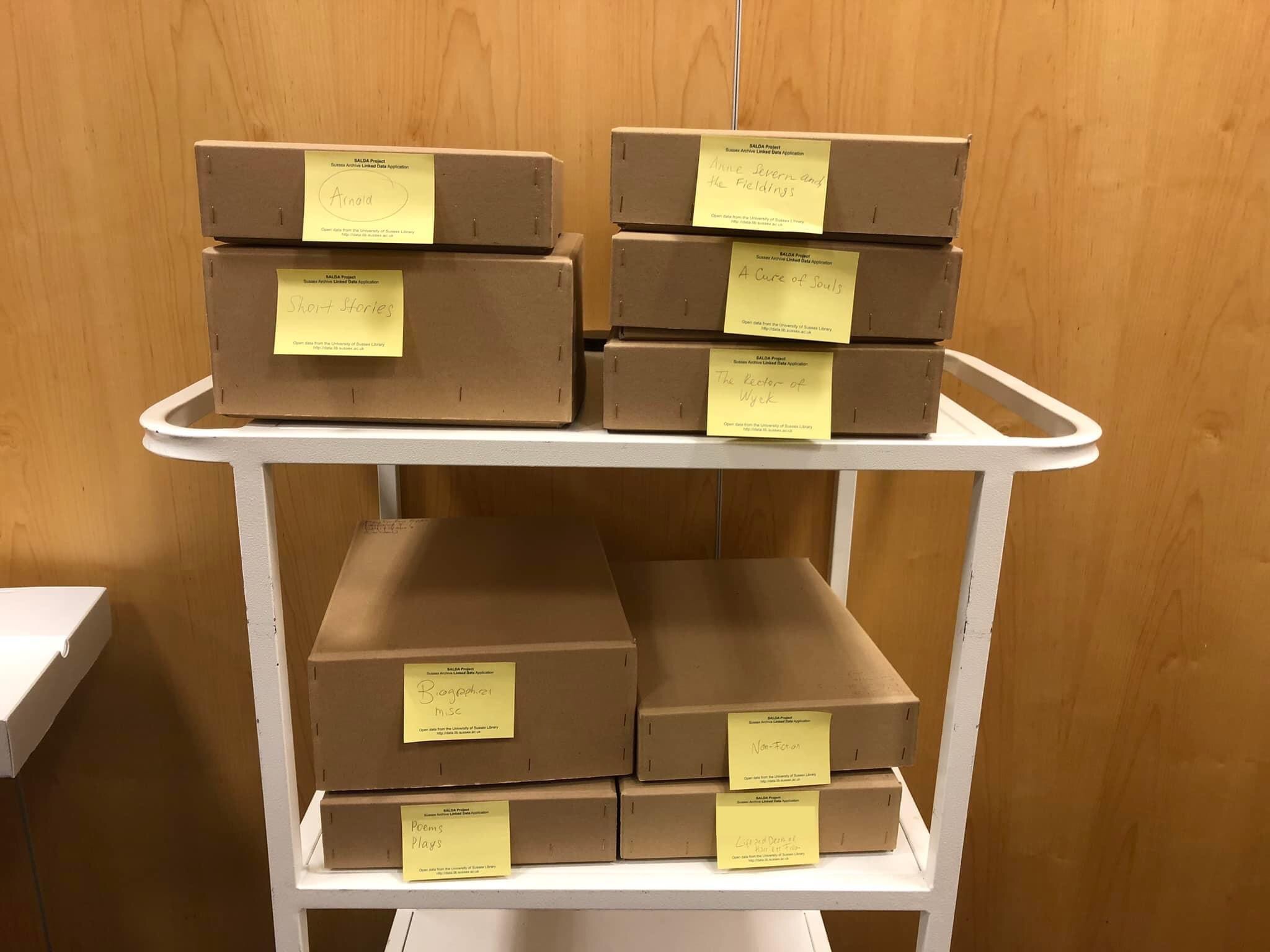
The team are grateful to the British Academy for funding this work.
 maysinclairsociety.com